Sunday, February 24, 2013

Reflection on GAME Plan EDUC - 6713


Part 1:

Creating and reflecting on my GAME plan has been a useful and practical way to prepare my students for a future where collaboration and technology are expected in the workplace. The feedback my classmates wrote on my blog provided links and suggestions to new learning. I learned ways to better reach my goal of adding technology assessments and evaluations in my classroom, and tips and techniques to monitor my students’ learning in a technology enhanced environment.  I have bookmarked links and resources that have provided me assistance in choosing project based learning and digital storytelling assessments so that I have a better well-rounded assessment grade book in my third grade classroom. In addition, this has impacted my classroom by providing motivation ways to assess my learners. I have yet to see a class that gets excited when the teacher assesses them. Adding technology assessments has changed their assessment attitude. Now, when I introduce a project based or digital storytelling project, my students’ enthusiasm is evident.

Following and learning about the GAME plan process has been a beneficial experience. I am still constantly revising ways to add a technology assessment project each marking period. For example, I recently did a digital storytelling project and collaborated with an older grade.  Since my students had help I struggled a bit on how best to assign a grade using the rubric that I developed. I will continue to research how to use technology collaboration projects and look for rubrics that align better to this type of learning.

Using the GAME plan format with my third graders is something I would like to try in the future. The most beneficial part would be to lead my students to understanding how to monitor their learning and change it to make it better. This is not impossible, but a challenging concept for the age of the students in my classroom.  They often see any work they do as their best and critiquing and changing it is a whole new way of learning for them.

Part 2:

 This course has given me the understanding behind integrating problem based learning, social networking/online collaboration, and digital storytelling into my instruction.  One huge advantage is how these types of projects are easy to differentiate for the varied learners in my classroom.  This helps me to improve my classroom environment to connect with all of my students. 

Dr. Abrams mentions “visual literacy” as a core characteristic of the present generation of students (Laureate Education, Inc, 2010). This point has helped me understand the importance of using a combination of written literacy with 21st century literacy. Some immediate adjustments that I plan to make in my instructional practice are to continue include problem based learning and digital storytelling in other content areas. I am developing a digital storytelling unit in science where my students will be teaching the class an area of the water cycle unit, by creating a digital story. In addition, I plan to Skype an expert meteorologist as a way to use social collaboration learning to the unit.

One of the most important things that I learned in this course is to use social media as a way to reach out to other educators for ideas. Without feedback from my classmates and instructor, the monitor, evaluate and extend parts of my GAME plan would be difficult to successfully complete. I will continue using social media as a way to grow as an educator.

            Moving forward, I can say with confidence that the GAME plan process has given me the tools necessary to create a technology environment that motivates and increases my young students' focus in my classroom.  My weekly lesson plans will include more technology in the form of project based learning, educational/social media, and digital storytelling projects. In addition, I will continue to make small changes in the areas of tweaking my grade book to include a blend of traditional and 21st century assessments. My classroom has evolved over the past seven weeks and transformed to include more meaningful curriculum based technology projects.


References

Cennamo, K., Ross, J. & Ertmer, P. (2009). Technology integration or meaningful classroom use: A standards-based approach. (Laureate Education, Inc., Custom ed.). Belmont, CA: Wadsworth, Cengage Learning.

Laureate Education, Inc. (2010a). Spotlight on Technology: Digital Storytelling, Part 1. Retrieved February 17, 2013, from Walden University: https://class.waldenu.edu/webapps/portal/frameset.jsp?tab_tab_group_id=_2_1&url=%2Fwebapps%2Fblackboard%2Fexecute%2Flauncher%3Ftype%3DCourse%26id%3D_2097789_1%26url%3D

Laureate Education, Inc. (2010b). Spotlight on Technology: Digital Storytelling, Part 2 [videocast]. Retrieved February 17, 2013, from Walden University: https://class.waldenu.edu/webapps/portal/frameset.jsp?tab_tab_group_id=_2_1&url=%2Fwebapps%2Fblackboard%2Fexecute%2Flauncher%3Ftype%3DCourse%26id%3D_2097789_1%26url%3D


Wednesday, January 30, 2013

Monitoring My GAME Plan Progress

The goal this week is to monitor my personal GAME plan, an important part of the GAME plan process.

First, I will reflect on how I am doing in the area of gathering my needed resources. My Walden classmates have been very helpful in providing me with additional resources besides the ones I have found on my own. Sharon provided me with several project based learning resources. These websites are helping me decide on one type of project based assessment and some of the resources included a rubric so that I can develop a midpoint checklist. Assessing my student’s project based technology task half way through will enable me to re-teach and or model any troubling areas in the lesson. In addition, my students will be able to adjust their project and determine what should be revised and what still needs to be completed.  Mr. Clark suggested that I remember to include parent information to increase my student’s learning since their parents play an important role, especially since my students are in third grade.

Second, I will reflect on if my plan needs modifying. The answer to this question is “yes!’ I began my plan thinking that I would use one formative and one summative type of assessment while incorporating technology. Now I want to just focus on using authentic technology assessments such as a project based learning assessment.  I am finding that using assessments from the programs that I use in my classroom already have built in summative assessments, so I it will not be necessary to add more of these type of assessments in my classroom.

Third, I will summarize what knowledge I have gained thus far. I have inquired a lot of additional information on types of assessments and ways to incorporate technology with each type. In addition, I have found the need to focus on developing one type of authentic project based assessment. To make this assessment meaningful, I found the need to plan a midpoint assessment. I found benefits in including this, and by incorporating a midpoint assessment I will reach my goal of better managing my student’s learning in a technology environment.

Lastly, I have a few new questions to add to my GAME plan. What are some easy to manage midpoint checklist assessments in a project based assessment? What weight will the midpoint check assessment have in the total grading of the project? How do other elementary teachers monitor their student’s learning in a technology environment?  

As the authors of our course text pointed out, Assessment is more than the assigning of grades and serves a critical role in monitoring and evaluating the academic progress of students (Cennamo, Ross, & Ertmer, 2010).  The key to my GAME plan is to now choose an authentic project based assessment that incorporates technology in a meaningful way, while at the same time providing me with a way to evaluate my student’s progress towards reaching curriculum objectives.

 
References

Cennamo, K., Ross, J. & Ertmer, P. (2009). Technology integration or meaningful classroom use: A standards-based approach. (Laureate Education, Inc., Custom ed.). Belmont, CA: Wadsworth, Cengage Learning.

Wednesday, January 23, 2013

Carry Out My GAME Plan

To be successful in Carrying Out my GAME plan I will need to gather some resources.

First, I will develop a teacher survey for the teachers in my district who teach 3rd, 4th and 5th grade. I will design survey questions that ask educators how they manage their student’s learning in a technology-enhanced environment and how they use multiple methods of evaluation in their classrooms. I will use the information from the survey to create a PLC email group. This way I can collaborate with colleagues from my district, while trying to carry out my GAME plan.

Next, I will research and read some information about multiple methods of evaluation. I will look for one technology project based assessment that proved to increase student learning. Once found, I will tweak it to fit my third grade class. In addition, I will learn how to use our districts already approved benchmark testing program, and explore learning activities and instruction to increase student achievement on this district approved assessment.  I will collaborate with the other teachers in my building throughout this process.

Some additional information I may need is using my judgment on the correct balance of technology assessments to use with the third graders in my classroom. I am not sure there is any magic number, or combination of the correct amount of multiple methods of evaluation in a research article. I feel this will be something that my teacher instincts will have to guide. I will include student feedback into my decisions.

The steps that I have taken thus far are as follows. First, I have analyzed the data from our technology based benchmark testing program. I noted a weakness in comprehending informational text. I designed a lesson to teach strategies to strength comprehending informational text. I created a technology based assessment for my students to complete. This lesson served as a two-fold activity. My students are gaining knowledge on comprehending informational text while learning how to become better at taking tests on the laptops using the same benchmarking format.

As I journey through my GAME plan, I am open to any advice or ideas you can provide me. I feel this GAME plan will enable my students to score higher on our benchmark technology tests. In addition using technology will motivate my students to learn and become engaged in using technology in my classroom.

Wednesday, January 16, 2013

Developing My Personal GAME Plan

Developing My GAME Plan: Integrating the National Educational Technology Standards and Performance Indicators into my classroom will enable me to reach a higher level of integration of technology in my classroom.

As I reviewed the NETS-T, the indicators in which I feel most comfortable with are:

1. Technology Operations and Concepts: I am extremely confident in this area. I am somewhat known as the “tech guru” in my building. I possess the type of thinking ability that enables me to learn and or figure out almost anything new in technology. I “love” learning about a new technology and will walk into my classroom and try it out without any fear of failure. I learn along the way.
 
3. Teaching, Learning, and the Curriculum: I am involved in writing the technology curriculum; this committee helps me to understand the curriculum. This knowledge results in my ability to incorporate technology to support higher order skills and creativity and learner-centered strategies.
 
5. Social, Ethical, Legal, and Human Issues: I teach third grade and our district technologies guidelines and policies, combined with common sense are pretty clear. Each new school year I familiarize myself with any changes to the policy, so that I have a clear understanding how to promote a safe and healthy use of technology resources. My school does not have a huge array of diverse backgrounds, however if this ever changed I would update my technology resources to empower those learners.

The areas that I will focus on are:

2. Planning and Designing Learning environments and Experiences: This indicator is not exactly my weakness, but an area I could focus on is part E., managing my student’s learning in a technology-enhanced environment.

4. Assessment and Evaluation: Although I understand this indicator, I only use the district approved technology assessments to evaluate my students. I know I could bring my assessments to a higher level if I researched and incorporated more of a variety of technology assessment techniques. I am decent at using data to drive my assessment, but my assessments are not made up of multiple methods of evaluation.

Reflecting on these areas will guide my GAME plan.

G- Goals – My goal is to familiarize myself with the variety of technology assessments available to me and research how other teachers use these assessments to drive their instruction. I also want to figure out the right balance of multiple methods of evaluation so that I am not constantly assessing my students in a summative way, but also incorporating more of a formative way involving my students in using my feedback to monitor their learning in my classroom. While I use technology assessments, I will manage my student’s learning environment in an assessment type of way. I will focus on researching and using midpoint formative assessment when incorporating my technology projects. I will use the data from summative technology assessments to drive my instruction.

A-Actions- I will incorporate and experiment in using a combination of technology type of assessments in addition to some of the basic ones I already use. I will collaborate with other teachers in and out of Walden to see what type of technology based assessments increased student learning. I am also looking to research how technology could be used as a re-teaching tool based on assessment data.

M- Monitor – I will review my research about technology assessments and decide on incorporating two new technology assessments in my classroom. I will make the goal of using one formative and one summative assessment. I will collaborate with my colleagues and my classmates once I have used the assessments. In addition, I will ask for student feedback in the form of a survey. I will look at how technology assessments’ increased the level of learning and active engagement in my classroom. I will also monitor my ability to understand how my students’ learn best and judge if the technology assessment is adding to their learning so I can incorporate more positive technology experiences in my classroom.

E-Evaluate – I will evaluate and extend my learning through reflection by keeping a journal when my students are engaged in their technology assessments. This will help me to monitor and adjust my decisions about the type of technology assessments I will choose. I will also use the survey my students filled out and read their feedback to confirm or change my assessments and or teaching practices. I have the technology knowledge necessary to incorporate technology and use multiple technology assessments in my third grade classroom. There are a vast number of digital tools that support digital learning such as computer-based tutorials, wikis, and web-based programs that can help me analyze and evaluate my student’s learning as Cennamo, Ross, & Ertmer pointed out (Cennamo, Ross, & Ertmer, 2010). I am comfortable at so many levels of the NETS-T indicators that this plan will be beneficial to increasing my students’ learning by modifying my technology activities in my classroom.

References:

Cennamo, K., Ross, J. & Ertmer, P. (2009).Technology integration for meaningful classroom use: A standards-based approach. (Laureate Education, Inc., Custom ed.). Belmont, CA: Wadsworth, Cengage Learning.

http://www.iste.org/docs/pdfs/nets-t-standards.pdf?sfvrsn=2 Retrieved from: http://www.iste.org/standards/nets-for-teachers

Thursday, October 28, 2010

Reflections on My Personal Learning Theory

At the beginning of the Bridging Learning Theory, Instruction, and Technology course, I described my personal learning theory as mostly incorporating the Social Learning Theory. I did describe my classroom as full of engaging activities, relevant conversation, and lots of collaboration and learning. I also stated that bits and pieces of the other theories are intertwined in my personal belief of how my students learn.

As a third grade teacher, there is part of the curriculum that requires memorizing and increasing my students’ knowledge by delivering new information. Throughout this course, my understanding of learning theory, instructional strategies and use of available technologies have grown. This growth has resulted in having a better understanding of the learning theories and how each approach can be used to help my students complete learner-centered activities. This course has made me realize that technology supports all of the learning theories. It provides me with enough tools to help reach all learners. Technology tools are so versatile and can be used in many ways by my students and myself.

One immediate adjustment I have made to my instructional practice is to use more of a learner-centered approach and less of a teacher-centered approach. I have done this in response to Dr. Orey’s statement that the worst instructional approach is to lecture. (Laureate Education, Inc., 2009) I sometimes use a lecture approach because it is the quickest way to cover material. I have learned from this course to allow my students to construct meaning by completing a hands-on activity and provide opportunities for my students to learn from others. These activities are the best way for my students to be engaged in their learning. I have always struggled with understanding why so many of my students do not pay attention when I lecture. Now I understand why and have adjusted my teaching to allow for more hands-on creative projects that incorporate technology.

This class has introduced me to many new technology tools. Concept Maps and Voice Threads are the two that I feel will be the most beneficial to my third grade students.

The first technology I plan to use is a concept map internet tool. I have used this tool in a lesson this year. My goal is to integrate technology based concept maps more into my classroom. I have found that these maps help my students to organize and understand knowledge. As stated in the text, “Multimedia is very effective because it helps students both activate prior knowledge and develop a mental model to help them understanding new information.” (Lever-Duffy and McDonald, 2008, p. 82) I have always used graphic organizers, but I find incorporating technology by using the Concept Mapping tools have motivated and helped my students to develop a mental model, organize, and understand taught concepts better.

The second technology tool I plan to incorporate in the near future is VoiceThreads. I am working on getting the site unblocked. VoiceThreads are a technology that enables me to step away form the front of the classroom and watch and guide my students with a meaningful learner-centered experience. Incorporating both of these technologies will enable my students to be better prepared for the 21st century workplace.

In the long term, I hope to adapt new technologies such as Voice Threads to enhance and increase student learning. First, I need to submit a rationale for using VoiceThreads with my students. Next, I will incorporate Voice Threads into my teaching as explained in my technology lesson plan that I have developed for this course. Last, I will present to my colleagues the new technology and highlight its benefits and discuss my experience with using it. My goal is to be using Voice Threads with my students by January.

My second goal is to present my experience and my findings at a faculty meeting in April. To achieve my second goal, I will create a VoiceThread from my experience. My expectations are to use my VoiceThread as a professional learning experience. I will invite my colleagues to have a conversation about the advantages of using VoiceThreads in the classroom. My second goal will allow for teacher collaboration and conversation about technology. My goal is based on the fact that many teachers complain that there is never enough time to learn about new technologies. I am on the technology committee in my school and this goal will help teachers in my building learn a new technology tool.

Achieving my long term goals will result in a wonderful experience to implement new technology into my lessons and share them with my colleagues. I will remember as I do this to relate the proven strategies and learning theories that I have learned in this class into my lessons along with the new technology.

References
Laureate Education, Inc. (Executive Producer). (2009). Instructional theory vs. learning theory [Motion picture] Bridging learning theory, instruction, and technology Baltimore: Author.
Lever-Duffy, J. & McDonald, J. (2008). Theoretical Foundationst (Laureate Education, Inc., custom ed.). Boston, MA: Pearson Education, Inc.

Tuesday, October 5, 2010

My first Voice Thread "Writing for high-stakes test or writing as a process??"


Here is my first voice thread. My problem is two-fold. First: What effects do high-stakes Language Arts writing test have on writing ability? Second, Will using a voice-thread help generate ideas for struggling writers?
Please look at my whole slide show when you are finished listening. I am excited to hear your thoughts about my two problems.

Connectivism and Social Learning in Practice

Social learning is built on the foundation that students learn by interacting with others. This learning can be achieved in different ways in the classroom. One way that we looked at this week was cooperative learning. “Cooperative learning focuses on having students interact with each other in groups in ways that enhance their learning” (Pitler, Hubbell, Kuhn, & Mealenoski, 2007, p139) It was also stated in our text that cooperative learning is achieved when students cooperate to learn. (p143)

In order for students to learn with and from each other it is important that I model my expectations and plan ways for every student to be accountable for learning. I often close a cooperative learning activity by posing a few questions and randomly asking for one of the group’s members to state the answer. Each group member receives a number and they are aware of the fact that they could be called to answer the questions. This motivates all of the group members to pay attention and learn the answer if they do not know it. It also gives the students who think they always know the answer time to listen to other member’s opinions and to include them in their group’s answer. Having the experience of finding an answer from other students, and understanding different ways to solve a problem is what social learning is all about.

Social learning can be successful in any classroom if it is implemented and managed correctly. The teacher’s role is to monitor each group, adjust and clarify if needed. One advantage of social learning is that differentiated learning can be achieved easily. I find it challenging to differentiate with a group of 24 learners when I am the only teacher. However, when cooperative learning structures are used, I can more easily reinforce skills with my struggling students, while challenging my brighter students at the same time. This does take a lot of thought and planning on the teacher’s part. Technology especially helps to achieve this daunting task. Through the use of Web Quests, I can easily plan and choose different Web Quests to match the level and ability of my students.

Resource:
Lever-Duffy, J. & McDonald, J. (2008). Theoretical Foundations (Laureate Education, Inc., custom ed.). Boston, MA: Pearson Education, Inc.

Tuesday, September 28, 2010

Constructivism in Practice

Constructionism is a theory of learning that states that people learn best when they build an external artifact or something they can share with others(Laureate, 2009). In a classroom that promotes this theory, the teacher becomes a guide. In a constructionism classroom it is hard at first glance to locate the teacher, because the teacher will be engaged with the learners. The teacher will spend time rotating around the room to ask thought-provoking questions to the students.

Using the available technology is an excellent way to incorporate the Constructionist Learning Theory. Today’s students are around technology in their free time and have grown accustomed to finding pictures, information, and answers instantly at the push of a button. In the book Using Technology with Classroom Instruction that Works,I read in chapter 11 about generating and testing hypotheses. I learned that just assigning a project or a problem-based activity is not enough. A teacher needs to carefully understand that the way the project expectations are presented play a vital role in the learning outcome.

The key to successful problem (project)-based classroom activities is to have some guidelines in place. Begin the problem-based activity with clear expectations including any explanation of how the project will be graded. Discuss with your students the assignment and clear up any confusion. Brainstorm different strategies for completing the activity. Importantly, discuss with the class how to attack the problem. Students should, with teacher assistance, generate hypotheses and conclusions throughout the activity. Dr. Orey stated that Constructionist theory is focused on individual learners and what is going on in their mind as they go about constructing things.(2009) When students are guided to generate and explain hypotheses and conclusions, then the teacher is encouraging creative thinking and accepting more than one possible answer. The teacher is also allowing the students to discover an answer instead of giving an answer, a sometimes difficult teacher task. This activity also encourages students to experience accommodation and assimilation.

There is no better or more motivating way to use the constructionist theory in your classroom then to incorporate technology. By using technology tools such as the internet, word processing, PowerPoint Presentations, publishing tools, Excel Spreadsheets, wikis and podcasting, students can collaboratively create a project that will prepare them for working in the real world.

Resources:

DVD: Laureate Education, Inc. (2009). “Bridging Learning Theory, Instruction, and Technology

Pitler, H., Hubbell, E., Kuhn, M., & Malenoski, K. (2007). Using technology with classroom instruction that works. Alexandria, VA: ASCD.

Monday, September 20, 2010

Cognitivisim In Practice

This week I learned about the Cognitive Learning theories and the ways teachers can open up their student’s working memory. In Using Technology with Classroom Instruction that Works, Pitler, Hubbell, Kuhn, and Malenoski (2007) discuss two instructional strategies that reflect cognitive learning theory and technologies that support them.

Chapter 4 of Pitler, Hubbell, Kuhn, and Malenoski (2007) book, “Cues, Questions, and Advanced Organizers” examines strategies that help learners “retrieve, use and organize information about a topic” (p.73). Cues provide hints about what students are going to learn and questions are similar but they help students make connections from what they know to what they are learning. Advanced organizers provide a structured way to organize information about a new topic or concept. I use cues and questions in almost every lesson I teach in my third grade classroom. I especially use questions beginning at the bottom of Bloom’s taxonomy and advance my questions all the way up to application, analysis, evaluation based on my student’s understanding. I also use several types of organizers. I mostly use graphic organizers in reading to help my students make sense of fiction stories. I also use a KWL organizer while building background prior to reading unfamiliar stories, and reading nonfiction texts in the areas of science and social studies. Most of these activities are presented to my class in cooperative learning groups. This structure compliments the cognitive learning theory nicely.

Chapter 6, Summarizing and Note Taking, focuses on “helping students separate important information from the extraneous and state the information in their own words” (Pitler, Hubbell, Kuhn, and Malenoski, 2007, p.119). We learn that taking notes word for word is the least effective way to take notes. This made me think a lot about my class. Third grade is the first time my students are introduce to note taking. I guide them through the process while explaining the purpose for note taking is to help one learn and understand the information of nonfiction. Eventually I have my student’s take notes on their own in cooperative learning groups. Last year my class was particularly skilled at doing this in science. I give my class typed notes to study from. This year I will try and have my class create their own outlines to study from. I am curious if they will retain the information longer and if they have created their own outline.
In Dr. Michael Orey’s video this week he said, “present things both visually and auditory to integrate multiple senses in presentations will improve learning” (Laureate, 2009). I try and use an even mixture of images and text so that my students remember what they are learning. Concept Mapping Tools and Virtual Field Trips are a great resource to help accomplish this task.
A teacher and her visual technology tools together can facilitate meaningful student learning while incorporating the cognitive learning theory. This will create a learning environment where textbook information can be more easily processed.

References:
Laureate Education, Inc. (Executive Producer). (2009). Cognitive learning theories [Motion picture] Bridging learning theory, instruction, and technology Baltimore: Author.
Lever-Duffy, J. & McDonald, J. (2008). Theoretical Foundationst (Laureate Education, Inc., custom ed.). Boston, MA: Pearson Education, Inc.

Tuesday, September 14, 2010

Behaviorism in Practice

Behaviorism remains an essential part of learning practice in and out of the classroom. This week I read about incorporating technology while reinforcing effort and the importance of homework and practice. Both of these instructional strategies are supported by behaviorism because students learn when effective learning behavior is reinforced. Certain technologies can support effective operant conditioning to reinforce student effort, homework, and practice (Pitler, Hubbell, Kuhn, & Malenoski, 2007)

Within the text, Understanding Technology with Classroom Instruction that Works, the authors state that, “the instructional strategy of reinforcing effort enhances student’s understanding of the relationship between effort and achievement by addressing their attitudes and beliefs about learning” (Pitler, Hubble, Kahn, & Malenoski, 2007, p. 155). I know that many students often fail to understand the connection between effort and performance. I have heard my third graders say several times that they are just not good at math or reading, and that is why they do not do well in those subjects. I agree with the text in that this excuses the students from taking responsibility for failure. The most powerful thing I learned from this week’s reading is that this cycle can easily be fixed. Pitler, Hubbell, Kuhn, and Malenoski (2007) recommend that students use rubrics and spreadsheet software to track their efforts in class. I know from past experience that any learning I discovered by recording data has been a powerful discovery. I also feel that the act of discussing the correlation between effort and achievement is a way to get students to be conscience of their effort in class. By guiding students to see the consequences of their efforts, this teacher act reinforces behaviors that contribute to learning and academic success.

Homework and practice are also important learning behaviors that students often view as negative and useless. Again, helping my students to see the connections between effort put into homework assignments and report card grades is another important point to make. Homework and practice is an easy area for teachers to incorporate technology. I use a website called homework hero to post my assignments. In addition to the website, I also include many likes to websites that reinforce third grade skills. I encourage my students to use Microsoft word to type their spelling homework. I model with my students how Microsoft word can be used to improve their spelling sentences/paragraphs. I explore the use of spell and grammar check in addition to using the thesaurus to use and expand vocabulary. The use of these technologies are a perfect example of Skinner’s programmed instruction as pointed out by Dr. Orey in his explanation of operant conditioning (Laureate, 2009).

Resources:
Laureate Education, Inc. (Executive Producer). (2009). Behaviorists learning theory [Motion picture] Bridging learning theory, instruction, and technology Baltimore: Author.

Pitler, H., Hubbell, E., Kuhn, M., & Malenoski, K. (2007). Using technology with classroom instruction that works. Alexandria, VA: ASCD.

Friday, October 30, 2009

Reflections from Understanding the Impact of Technology on Education, Work, and Society

In the beginning of this course, I thought to myself, “By not taking any technology classes for the past 3 years,” “Have I been left in the dust?” “What happened?” I now know what happened, Web 2.0 applications have changed technology integration in the classroom. With this being said, I found this class to be challenging, time-consuming, and extremely beneficial. I just told someone the other day I have never learned so much in an 8 week time frame in my life! This fact proves that if professional teachers do not keep up with technology, in a few short years, what one knows about technology is outdated. This course has helped me understand what is new in technology, the benefits of using technology in the classroom, and how to become an avid user of Web 2.0 technology.

My knowledge of teaching and learning has been expanded by integrating Web 2.0 technology. I had no idea what the term Web 2.0 meant. I especially never thought about technology and its relationship with 21st century skills. By learning about these skills, I can now bring my lessons to a new level. Sometimes in third grade, just having a conversation about technology and its relationship to the workplace is all that it takes to make that connection with my students.

I have always been more of a learner-centered type of teacher. I use many project based activities in my classroom. I enjoy motivating my students to explore and discover new things on their own. I like being the guide on the side. It was interesting to read the research that proves student-centered classrooms create a better classroom learning environment, and students spend more time on task which equals greater learning.

The ways I can continue to expand my knowledge of learning, teaching, and leading with technology is to continue pursuing the Integrating Technology in the Classroom Masters' Program, keeping up with reading the professional blogs, and continuing using Web 2.0 technology. The more comfortable I become with using Web 2.0 applications, the easier it will be to incorporate them into my lessons. Increasing student achievement is always on top of my list of important things to accomplish as a teacher. The tricky part is to incorporate technology in a way that helps my third grade students prepare for the “non technology - non 21st century’’ state test. My students are very motivated to learn when I teach my lessons in the computer lab. This motivation increases learning. I will continue researching ways to combine the two; using technology to improve student achievement on the state test.

In the next two years I plan to incorporate more technology into my classroom. I will include these goals in my Professional Improvement Plan. This plan is submitted to our Principal and goals have to be met. My first goal will be to use the lap top cart, and the smart board that has been purchased, but is not ready for classroom use right now. I will volunteer to use these technologies in my classroom to increase motivation, learning, student achievement, and allow me to do something different with the use of technology. Having these goals as my Professional Improvement Plan will help to bring technology to my classroom. This class has provided me with the knowledge I need to fulfill my PIP objective. I will use my experience in teaching, my creativity, and the curriculum to guide me in incorporating technology daily into my lessons. It will be my goal to use technology to do something different. I will record and reflect each week on my lessons. This will enable me to monitor and adjust my teaching to make the most effective use of technology. I am hopeful that by incorporating technology in a small way each day, at the end of two years, there will only be a few lessons in my classroom without the incorporation of technology, not the other way around.

Wednesday, October 14, 2009

My First Technology Podcast

http://julieannebudd.podomatic.com/entry/2009-10-14T06_08_37-07_00
My first podcast took a long time to create. I used audacity to record the sound. This was the easy step. The problem was converting the wav file to an mp3 file without the proper programs loaded on my school computer. There are firewalls that prevent a lot of downloads. Needless to say, I am proud that I finally was able to publish my podcast. I learned a lot about “audio” files. I feel that podcasting is a very motivating Web 2.0 application. My third graders love to hear their voice. As I work out the technology issues with the conversion of audio files I am hopeful that I can have my third graders record a podcast too. I have attached my podcast’s URL. I hope you enjoying listening to the results of my third grade technology survey.

Wednesday, September 30, 2009

Evaluating the 21st Century Skills

‘The Partnership for 21st Century Skills” website was designed with a vision of preparing our students to succeed as citizens and workers in the 21st century. When reading this week’s blog assignment, my first reaction was a shocking one. If this very important website exists, why then has it never been mentioned in my school district. As I read the information presented in the website, I was impressed by the organization and content of the information.

The information that surprised me from the website is that not every state is listed in the “How States are Integrating ICT Literacy into Schools.” (page 18-19) I am thinking that every state should be listed. I feel that when a teacher is viewing the website, it is a powerful statement to see your state listed. It also surprises me that the website was developed in 2002 and there is not a link to real world results. What I mean is if a school implemented the nine steps to build momentum,(page 20) “Were the results met?” “Did students succeed that went through the program?” Another surprising thing was the very detailed list about “How Key Stakeholders Can Support the Effort” (Page 24) Is there any research showing how public and private sectors have followed through with the website’s suggestions?

I did not disagree with anything on the website. As I stated above, I would just like to see an update as to if the plan works. I would also like to know if students are more prepared and succeeding at their jobs. It would be powerful to have some testimonials from students who went through the program.

The biggest implication for my students is to incorporate technology as much as possible in my daily lessons. For me as an educator, this is my vision for my students. The statement from pages 21 & 22 really made me think: “The power of core subjects and 21st century skills to make a difference in student learning is tempered by the fact that many students do not yet have access to them.” This was written in 2002, and here 7 years later, my students still do not have 21st century technology readily available to them in the classroom. As an educator, I need to come up with a plan to try and change this fact. I still have only 2 computers in my classroom. It seems that the majority of technology improvements that are made in my district happen in the middle school and high schools. This continues to be a challenge for educators to balance the teaching of basic skills and 21st century skills.

References:
Partnership for 21st Century Skills. (n.d.). A report and mile guide for 21st century skills. Washington DC: Author. Retrieved from http://www.21stcenturyskills.org/images/stories/otherdocs/p21up_Report.pdf

Wednesday, September 16, 2009

A Blog in Mrs. Budd’s Classroom (Using a blog as a way to read and write critical thinking responses in my third grade classroom)

Using technology is my favorite way to motivate my third grade classroom. The children love using computers. One example of how I would begin my blog would be to post a question and require my students to respond to my question, or another classmate’s response.

In my third grade class we read the book Balto, the Dog Who Saved Nome, by Margaret Davidson. After reading the book I ask the students the question: Who do you think was the hero in the story? Explain. I would begin my blog with this question. I would also provide links to some websites that provide information about Huskies, The True Story of Balto, and Attributes of Heroes. Providing these links on my blog will allow student to gain some background knowledge to assist them in responding to the blog’s question.

My hope is that students will come up with new ideas, show creativity and original thinking. Many students may start with trying to repeat what the first student response was. I think with proper modeling, students will expand their thinking as they become more comfortable with the world of blog writing. My ultimate goal is to transform my classroom into a community of learners.

Blogging requires teachers to show students how to write for a public audience. Prior to the posting of the answers to the blog question, many lessons need to be covered. Blogging etiquette lessons would be taught. The students would also be taught how to write an answer to a question for an audience to read. The last thing I would do is expose my students to several great examples of blog responses.

A rational for my blog lesson:
Blogs are changing the way students learn. They provide the opportunity for students to spend quality time in school and at home sharing knowledge, opinions and learning from others. My blog would promote critical and analytical thinking. When I wrote this lesson I had not previously had a classroom blog. In my reading lessons, I like to ask thought provoking questions to lead my students to higher levels of thinking. The teaching of reading is really more the teaching of thinking. Students need to be shown how to think as they read. I am constantly telling my students that a good reader is always thinking. A great way to show my students this would be to create a critical reading blog. A blog is an excellent opportunity to allow my students to read and write more while collaborating and discussing higher level thinking questions. I look forward to implementing this lesson as I grow more comfortable in using blogs.

Wednesday, September 9, 2009

Trade With Me


Wednesday, September 09, 2009


Welcome! Welcome to my technology trading blog. I open this blog up to all educators. Think of this blog as a recession buster. You can trade your great technology ideas for free.

Work: I have been teaching third grade for 12 years. I utilize technology in several capacities. I use it to plan my lessons, post grades, communicate homework assignments for parents (Genesis), to motivate my students, and enhance my classroom lessons.

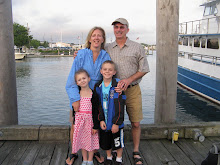
Home: I live in New Jersey. I am a mom of two active children. My 8 year-old son Daniel is in third grade. He plays travel soccer and loves sports. He is also involved in cub scouts (I am Den mother). My 6 year-old daughter, Abigail, is in first grade. She competes as a member of a nationally ranked dance team. She loves art and draws all the time. She is an active member of Daisy Scouts. My husband runs his own moving and storage business. My favorite free-time activities are traveling, exercise classes, and cooking. As a family, we enjoy traveling and hiking.

Ideas / Tips: One of my favorite technology lessons is my Midwest Wax Museum PowerPoint project. While studying the Midwest region, my students create an exhibit of a famous person, alive or dead from the Midwest region. Then they create a PowerPoint presentation describing attributes of the famous person and facts from their birth state. Finally, the museum opens and each learner dresses their part. Buttons are placed on the floor and when you push the button, the wax figures come to life describing who they are and where they are from. This project is both motivating and enriching to my Midwest Region Unit. Tip: this project takes a lot of time on the computer. One to two hours of lab time a week for about six weeks. The students are taught how to use PowerPoint prior to this project.

Trading: Please share any of your favorite technology lessons with me. I am interested in focusing on creating some technology lessons that enrich test prep. In my state, I spend a lot of time on preparing my learners for the NJASK (our state test). It would be nice to learn about how other teachers have utilized technology to motivate students while preparing them for state tests. Please note I have only two computers in my classroom. I can sometimes use our computer lab that has 30 computers, a Smart Board, and two printers.